At Coin Wrap, we are proud to be the gears that keep the nation’s currency moving. Every day, our teams across the United States ensure that commerce flows smoothly through the hands of millions.
But as we enter the new year, we recognize that there is a different type of “circulation” that is even more vital to our communities: the supply of life-saving blood.
January is National Blood Donor Month, a time when donations are at their lowest due to winter weather and seasonal illnesses. Because blood cannot be manufactured and has a limited shelf life, the “supply chain” for hospitals depends entirely on the generosity of neighbors helping neighbors.
We are launching #CWCSleevesUp because our commitment to the communities where we live and work goes beyond logistics. Just as every coin we process has value, every pint donated has the power to save up to three lives. Whether you are in Dallas, Denver, or any of our locations nationwide, we are rolling up our sleeves to make an invaluable deposit into the health and future of our neighbors.
Together, let’s keep life in full circulation.
Did you know that one single blood donation can save up to three lives?
When you donate a pint of blood, it is rarely used as a “whole” unit. Instead, it is usually separated into three primary components, each of which can go to a different patient with a specific medical need:
Red Blood Cells: Often used for surgery patients or those who have suffered trauma (like a car accident).
Platelets: Vital for cancer patients undergoing chemotherapy, as the treatment often destroys their body’s ability to produce these clot-forming cells.
Plasma: Used to treat burn victims or patients with severe liver disease or clotting factor deficiencies.
A Few More Quick Facts:
A “Mini-Physical” for You: Every time you donate, your blood is tested for things like blood pressure, hemoglobin levels, and infectious diseases—giving you a free, basic health checkup.
Short Shelf Life: Blood is a perishable resource. Red blood cells only last for 42 days, and platelets must be used within just 5 days, which is why a constant stream of donors is always needed.
The Rare Universal: While Type O-negative is the “universal donor” for red blood cells (anyone can receive it), Type AB is the “universal donor” for plasma.
January is actually National Blood Donor Month, a time when donations are especially critical due to winter weather and seasonal illnesses.
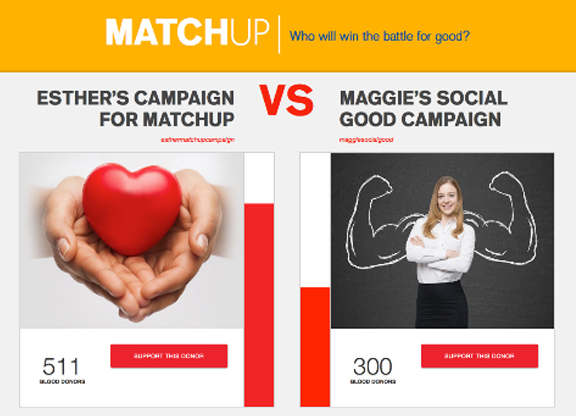
Challenge your friends (or anyone for that matter) to a friendly competition! Who will win the battle to do the most social good for your community?
Put your virtual blood drive campaign against one or even multiple other campaigns to see who can recruit more blood donors for the American Red Cross.